
‘Ghana Has Moved from Intensive Care Unit to Wellness Centre’ — Finance Minister
Gladson Afriyie
Journalist · Ghana Ntentan
Advertisement
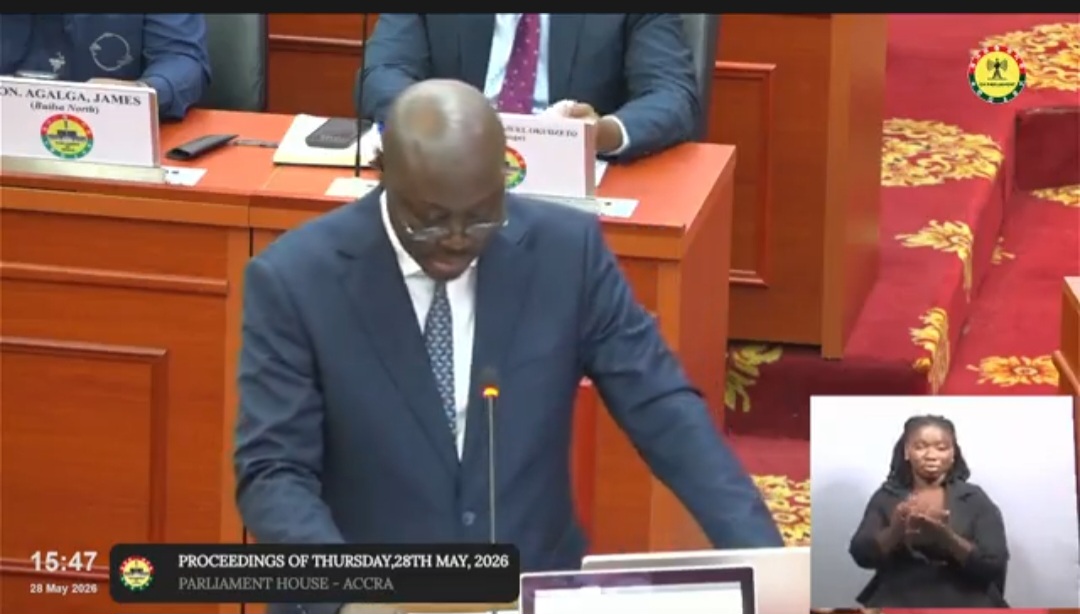
Finance Minister Dr Cassiel Ato Forson says Ghana’s economy has shifted “from the Intensive Care Unit to the Wellness Centre,” as he updated Parliament today on the country’s recovery and the conclusion of its IMF programme.
Dr Forson said the analogy reflects Ghana’s progress since the 2022 economic crisis that forced government into a $3 billion IMF bailout. “We were in crisis. Today, the key vitals are stable and improving,” he told lawmakers.
He cited falling inflation, stronger growth, and improved fiscal numbers as evidence of the turnaround. Inflation dropped to 12.1% in August 2025 from 23.8% in December 2024 — the lowest in 46 months. Real GDP grew 5.3% in the first half of 2025, up from 4.9% a year earlier, with non-oil growth at 6.8%.
Ghana has concluded the final review of its 17th IMF programme and expects a staff-level agreement before the end of September, Finance Minister Dr Cassiel Ato Forson announced in Parliament today.
Addressing the House, Dr Forson said the completion marks a “critical turning point,” stressing that President John Mahama has indicated this should be the country’s last IMF bailout. Government will not seek an extension or a new programme when the current $3 billion Extended Credit Facility expires in May 2026.
“The end of the IMF programme does not mean the end of responsible policy-making,” Dr Forson told lawmakers. To maintain investor confidence and fiscal discipline, he said Ghana will migrate to a non-financing Policy Coordination Instrument, PCI, with the Fund.
The PCI is a reform-monitoring arrangement that does not involve IMF disbursements but signals continued commitment to agreed economic targets. Dr Forson said the shift would assure markets that Ghana remains on a path of prudent economic management post-IMF.
He confirmed that all quantitative performance criteria and structural benchmarks under the final review have been met, paving the way for the IMF Executive Board to consider Ghana’s case next month.
Ghana entered the three-year ECF arrangement in May 2023 after a severe debt crisis and currency slump in 2022. The programme was anchored on debt restructuring, fiscal consolidation, and structural reforms.
Dr Forson said the “sacrifices made by Ghanaians are beginning to yield results,” citing falling inflation, improved growth, and a sharp drop in the debt-to-GDP ratio from 61.8% in December 2024 to 43.7% by July 2025.
Advertisement
About the Author
Gladson Afriyie
Journalist at Ghana Ntentan
Gladson Afriyie covers the latest developments in Ghana and across Africa for Ghana Ntentan. With a focus on accurate reporting and in-depth analysis, they bring context and clarity to the stories that matter most to Ghanaians.