
“Reparations Must Build Factories, Not Just Say Sorry” – Kwabre East MP Onyina-Acheampong Tells West to Fund Value Addition
Gladson Afriyie
Journalist · Ghana Ntentan
Advertisement
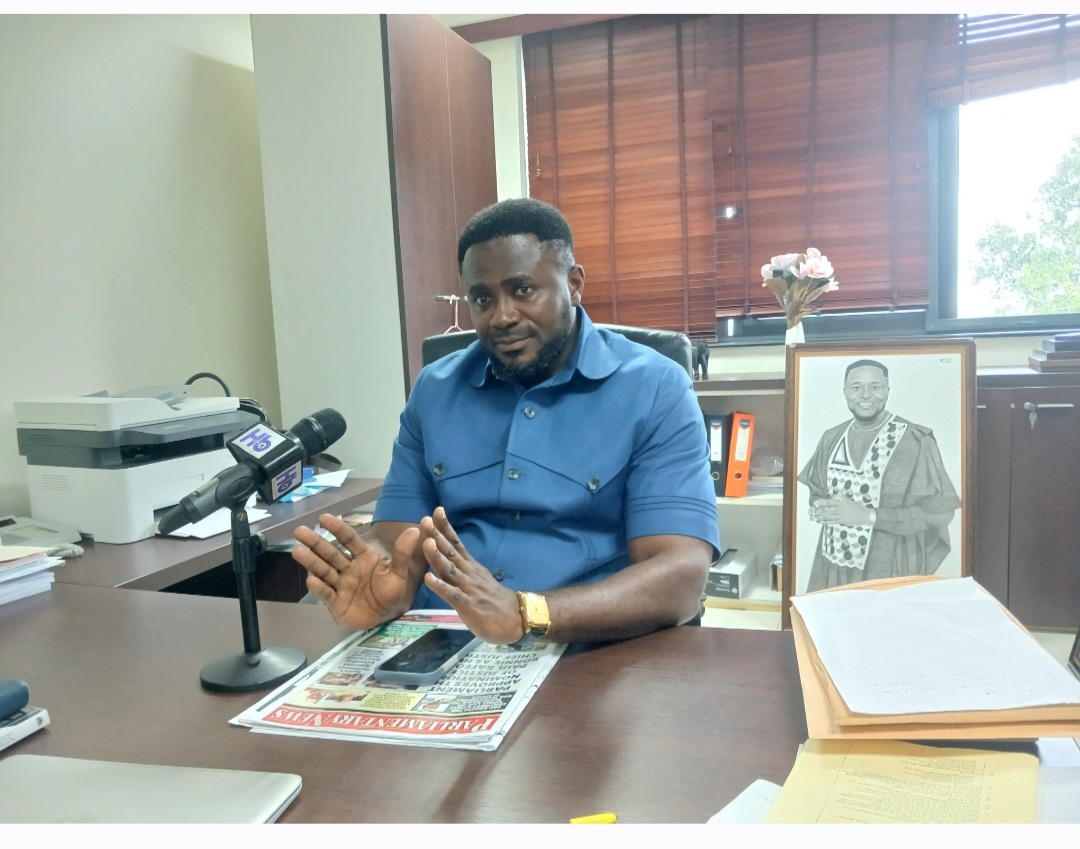
Kwabre East MP Hon. Akwasi Gyamfi Onyina-Acheampong says the global conversation on reparations must move beyond “symbolic apologies” to concrete industrial investment that ends Africa’s dependence on raw material exports.
Speaking to the media in Parliament, Hon. Onyina-Acheampong argued that financial compensation without structural change would fail to address centuries of economic imbalance.
“An apology is courteous, but an apology does not process cocoa into chocolate. It does not turn bauxite into aluminum. It does not refine our gold,” he said.
“If the conversation on reparations is to mean anything for my constituents in Kwabre East, then it must mean factories. It must mean machines. It must mean skills transfer that allows us to add value to what God has given us.”
The MP stressed that Africa cannot place “100 percent blame” on colonial powers for its current state.
“Yes, we were exploited. Yes, resources were taken. But after independence, what did we do with what was left? We also had a role to play. We cannot run from that truth.”
He estimated Africa’s own responsibility at “20 to 30 percent,” adding: “We had a hand in where we are today. Accepting that is the first step to fixing it.”
Hon. Onyina-Acheampong linked Ghana’s continued economic vulnerability to its failure to industrialize.
“We have cocoa, we have timber, we have bauxite, we have gold. Yet we ship them out raw. When you export raw, you are always at their back and call. You have no bargaining power. You cannot set prices. You cannot create jobs.”
“This is why our young people leave Kwabre East for the city, or worse, for the desert and the sea. Because the jobs are not here. The value is not added here.”
Outlining what reparations should look like, he said: “If we must ask for anything, let us ask that they help us add value. Let the machines come. Let the factories come. Let them partner with us to build processing plants in Mamponteng, in Kenyasi, across Ashanti and across Ghana.”
“Then, and only then, can we say we are truly independent of their help. Until then, any talk of reparations that ends at a cheque or a speech is incomplete.”
He cautioned against framing reparations as aid. “We are not begging. We are negotiating a historical debt in a way that creates mutual benefit. When Ghana processes its own cocoa, Europe still gets chocolate. But we get jobs, we get taxes, we get dignity.”
Advertisement
About the Author
Gladson Afriyie
Journalist at Ghana Ntentan
Gladson Afriyie covers the latest developments in Ghana and across Africa for Ghana Ntentan. With a focus on accurate reporting and in-depth analysis, they bring context and clarity to the stories that matter most to Ghanaians.