

Adenta Collapse: Developers Built Without Permits, Ignored Stop-Work Orders — Probe Finds
Gladson Afriyie
Journalist · Ghana Ntentan
Advertisement
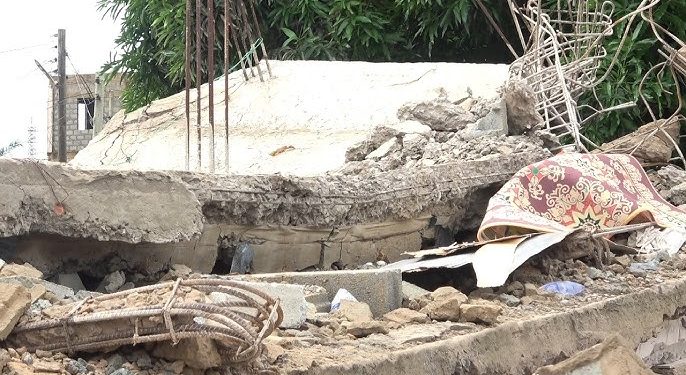
Developers of the three-storey building that collapsed at Adenta New Site built without required permits and defied official stop-work orders, a preliminary probe has found.
A Joint Technical Investigative Committee said in a statement Monday that the project lacked statutory approvals, including approved architectural and structural drawings, building permits, and other mandatory technical documents.
The committee comprises structural engineering specialists and representatives from the Ghana Institution of Engineering, the Institution of Engineering and Technology Ghana, and the Architecture Registration Council. It said the incident points to serious breaches of building regulations and gaps in enforcement.
The building collapsed on Wednesday, June 3, 2026, trapping five occupants under the rubble. The victims were Margaret Kpeli, believed to be in her late 30s; Fred Atagba, also in his late 30s; Solomon; and two children, Seyeram Dzigda and David Dzigda.
Four of them — Fred Atagba, Solomon, Seyeram Dzigda, and David Dzigda — were rescued alive with injuries after a coordinated search-and-rescue operation and taken to 37 Military Hospital for treatment.
Investigators said the Municipal Assembly had issued stop-work directives, but construction continued despite the orders. At the time of the collapse, work was underway on an additional floor. The committee described it as an unauthorised vertical extension that placed significant stress on a structure not designed for the extra load.
The preliminary report also noted that parts of the building remained occupied while construction was ongoing, heightening safety risks.
Several structural flaws were identified, including discontinuous load-bearing columns, poor-quality concrete, inadequate support systems, and improperly detailed reinforcement. These deficiencies likely contributed to the failure.
The collapse pattern was consistent with a progressive “pancake” failure, where the breakdown of critical elements triggers a chain reaction across multiple floors.
Concrete and steel reinforcement samples have been taken for lab tests to check compliance with engineering standards.
The committee recommended that NADMO secure the site and oversee the safe removal of unstable sections to protect the public.
It said the incident underscores the need for strict compliance with building regulations, professional supervision, and rigorous enforcement of approved construction standards.
Advertisement
About the Author
Gladson Afriyie
Journalist at Ghana Ntentan
Gladson Afriyie covers the latest developments in Ghana and across Africa for Ghana Ntentan. With a focus on accurate reporting and in-depth analysis, they bring context and clarity to the stories that matter most to Ghanaians.