
Don't Vet Supreme Court Nominees Without Confirming Judicial Council Advice - Afenyo-Markin to Appointments Committee
Gladson Afriyie
Journalist · Ghana Ntentan
Advertisement
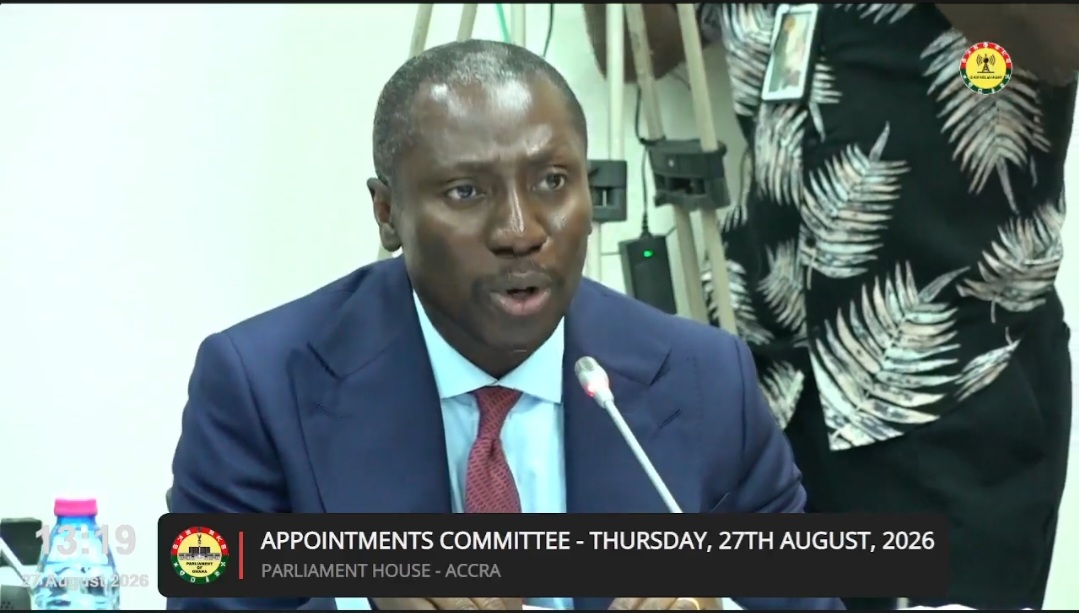
Minority Leader Alexander Afenyo-Markin is challenging the vetting of the three Supreme Court nominees, insisting the process should not proceed until Parliament confirms their constitutional foundation.
Speaking as the Appointments Committee prepared to vet Justice Sophia Bernasko-Essah, Justice Edward Amoako Asante and Anthony Forson Jnr, Afenyo-Markin said the Clerk of Parliament or the Attorney General must confirm on record that the required constitutional consultations were done.
"It should require the Clerk of Parliament or the Attorney General to confirm on record that the advice of the Judicial Council was in fact obtained and that genuine consultation with the Council of State in fact took place in respect of each of the three nominations," he said.
According to him, the truncated timetable adopted by the majority makes it impossible to verify those conditions.
"A truncated timetable makes it materially harder for this Committee to verify that these upstream constitutional conditions were actually met rather than merely asserted. This Committee ought not to vet nominees whose own constitutional foundation has not first been confirmed," he argued.
Afenyo-Markin further argued that compressing the vetting to conclude before the House rises offends Article 296 of the 1992 Constitution.
"Our next ground, we submit that this exercise of discretion by the majority required to compress this timetable offends Article 296 of the Constitution," he stated.
"Chairman, Article 296 provides that wherever discretionary power is vested in any person or authority, that power carries an implied duty to be fair and candid and its exercise must not be arbitrary, capricious, but must accord with due process of law."
He cited Order 266(3) of Parliament's Standing Orders, which empowers the Chairperson to fix the date and hour for considering a referred matter, saying it is a discretionary power that must be exercised fairly.
"The Chairperson's power under Order 266(3) to fix the date and hour for considering a referred matter and the Business Committee scheduling of this Committee's business generally are both discretionary powers within the meaning of that article."
"We submit therefore that a timetable driven solely by the desire of the majority to conclude before this House rises tomorrow, unsupported by any demonstrated exigency given that no vacancy exists..."
Advertisement
About the Author
Gladson Afriyie
Journalist at Ghana Ntentan
Gladson Afriyie covers the latest developments in Ghana and across Africa for Ghana Ntentan. With a focus on accurate reporting and in-depth analysis, they bring context and clarity to the stories that matter most to Ghanaians.