
Mahama Unveils New Anti-Galamsey Strategy: Military To Remain In Reclaimed Forest Reserves
Gladson Afriyie
Journalist · Ghana Ntentan
Advertisement
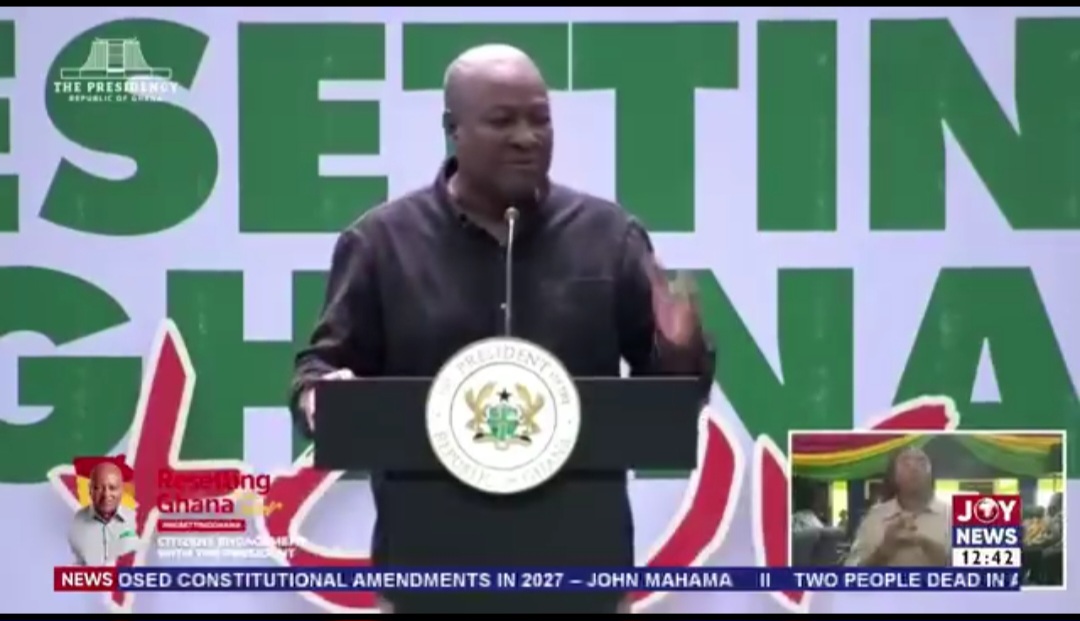
President John Dramani Mahama has announced a new government strategy to stop illegal miners from returning to forest reserves after they have been cleared.
Speaking during his tour of the Upper East Region, the President said the state will now *keep military detachments stationed in reclaimed forest reserves* to prevent renewed encroachment by _galamsey_ operators.
He explained that the previous method of handing cleared reserves back to the *Forestry Commission* failed because illegal miners would simply drive out forest guards and resume operations.
“Before, what we did was when we cleared, we handed over to the Forestry Services Commission. But they don’t fear the Forest Service; they go and drive the forest guards out, and they go back into the mine. And so now we put a military detachment,” President Mahama said.
*“We Are Making Progress”*
The President noted that government, through *NAIMOS*, has been seizing excavators and changfang machines and chasing illegal miners from one area to another.
He added that as many as possible of the *nearly 49 forest reserves* that were invaded by illegal miners have so far been cleared.
Under the new arrangement, soldiers will remain in the reserves after clearance operations.
“After we’ve cleared the forest reserve, we leave a military detachment there. And that means we have to spend more money. One, you must feed the soldiers; you must provide them with the logistics to continue to stay there in the forest,” he stated.
Despite the extra cost, President Mahama said the fight against illegal mining will continue.
“But we will not give up; we will continue the fight against illegal mining,” he assured.
Advertisement
About the Author
Gladson Afriyie
Journalist at Ghana Ntentan
Gladson Afriyie covers the latest developments in Ghana and across Africa for Ghana Ntentan. With a focus on accurate reporting and in-depth analysis, they bring context and clarity to the stories that matter most to Ghanaians.