
BoG to Rebrand Rural Banks as Community Banks to Expand Credit for Traders and SMEs
Gladson Afriyie
Journalist · Ghana Ntentan
Advertisement
The Bank of Ghana is overhauling the rural banking sector to close a major credit gap facing traders, artisans, start-ups and other informal businesses.
Governor Dr. Johnson Asiama says the plan is to convert rural banks into community banks that can lend directly to businesses still shut out of formal financing, even though they live near bank branches.
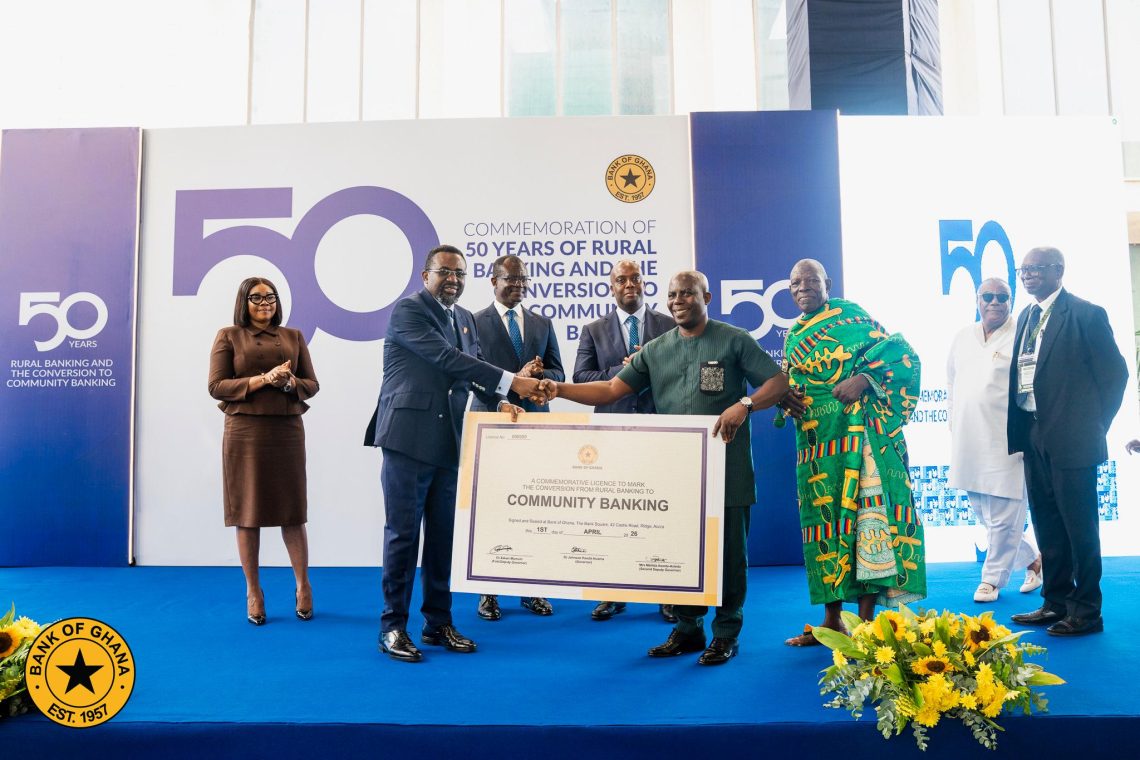
Speaking at an event to mark 50 years of rural banking in Ghana, Dr. Asiama said physical proximity to a bank does not guarantee service.
“There are households in Accra right here that can see a bank tower from their front door, they can see a bank tower, but they have never had a loan from it,” he noted.
“Access is not the same as service and when national policy opens a financing window... the benefit too often stops at the doors of the largest institution.”
He acknowledged that mobile money and digital services have widened financial access. But he said that alone does not help small businesses get the loans they need to grow. Many traders, artisans and young entrepreneurs, even in cities with lots of commercial banks, still struggle to secure credit.
To fix this, BoG will expand the mandate of community banks. The new model will allow such banks to be set up wherever there are underserved businesses — in both rural and urban areas.
“So we are creating the room for community banks to be established wherever they are needed, rural or urban,” Dr. Asiama said.
“You should not be surprised when you meet the East Lagoon Community Bank or the Cantonment Community Bank, or better still, the Airport Hills Community Bank. And before anyone asks, no, East Lagoon is not short of bank branches. It is short of banks that will lend to the woman who trades there, or the artisan, the carpenter who works right there, and of course the young business that has just opened its doors right there.”
The central bank expects community banks to play a bigger role in financing the informal sector and fixing long-standing gaps in financial intermediation.
The reforms come as the industry marks 50 years since Nyakrom Rural Bank, Ghana’s first community-owned bank, was established.
Today, the sector has grown into a GH¢26 billion industry with 147 licensed rural and community banks operating more than 1,000 branches and serving over 8 million customers.
Advertisement
About the Author
Gladson Afriyie
Journalist at Ghana Ntentan
Gladson Afriyie covers the latest developments in Ghana and across Africa for Ghana Ntentan. With a focus on accurate reporting and in-depth analysis, they bring context and clarity to the stories that matter most to Ghanaians.