
Deputy Lands Minister Makes Case For Predictable Funding, Community Benefits At TFFF Roundtable In New York
Gladson Afriyie
Journalist · Ghana Ntentan
Advertisement
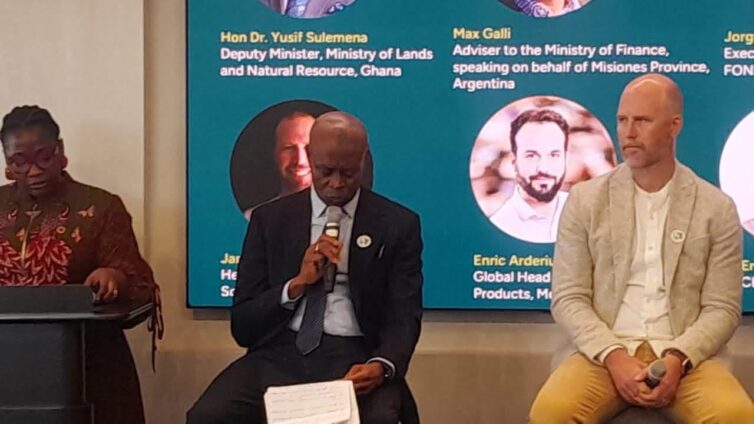
Ghana’s Deputy Minister for Lands and Natural Resources, Hon. Dr Alhaji Yusif Sulemana (PhD), has called on the Tropical Forest Forever Facility (TFFF) to anchor its financing model on predictable funding, direct community benefits and robust national systems.
Speaking at the TFFF Roundtable in New York, the Bole-Bamboi MP said tropical forest countries need clarity on eligibility criteria and payment rules to enable long-term planning for forest protection, beyond short-term project cycles.
He noted that Ghana’s experience under REDD+ offers important lessons for designing a sustainable financing framework that can endure.
Dr Sulemana emphasized that communities at the frontline of forest conservation must see transparent and tangible benefits, stressing that there should be a clear link between protecting forests and improving livelihoods.
“We must ensure that people can see that keeping the forest standing improves their lives,” he indicated.
The Deputy Minister also urged the Facility to build on existing national monitoring, safeguards and benefit-sharing systems instead of creating parallel structures that would increase costs and bureaucracy.
He further renewed Ghana’s July request for a seat on the TFFF Interim Board, arguing that Ghana’s practical experience in forest governance positions it to contribute meaningfully to discussions on the realities confronting African tropical forest countries.
Dr Sulemana commended Norway and Brazil for their leadership in advancing the TFFF agenda, noting that the critical question for Ghana is how international forest finance can provide reliable and long-term support for keeping forests standing.
Advertisement
About the Author
Gladson Afriyie
Journalist at Ghana Ntentan
Gladson Afriyie covers the latest developments in Ghana and across Africa for Ghana Ntentan. With a focus on accurate reporting and in-depth analysis, they bring context and clarity to the stories that matter most to Ghanaians.