
Don't Blame US For Slave Trade, Europe Responsible – Mahama
Gladson Afriyie
Journalist · Ghana Ntentan
Advertisement
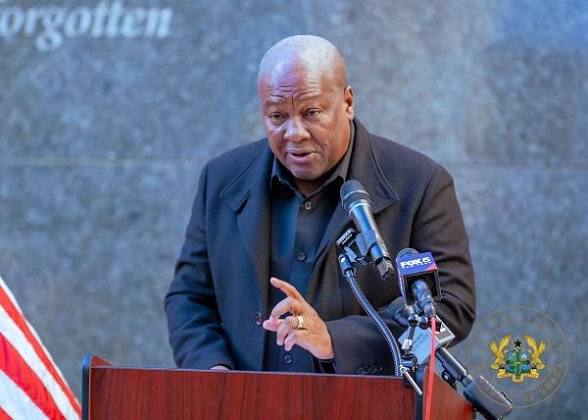
President *John Dramani Mahama* says although the United States benefited significantly from slavery, the country should not bear the guilt for the transatlantic slave trade.
According to President Mahama, European powers were primarily responsible for transporting enslaved Africans to the Americas at a time when the US itself was still a colony.
Speaking in an exclusive interview with *TRT World* on Friday, August 22, President Mahama acknowledged that slave labour contributed to the development of the United States, including the building of its railway infrastructure.
_"It built their railways, it did things for them and all that. But I don't think that they should bear the guilt, in a certain sense, for it,"_ he said.
President Mahama was responding to questions about the United States' decision to vote against a Ghana-backed *United Nations resolution* declaring the slave trade the greatest crime against humanity.
The US, Israel and Argentina were the only three countries that voted against the resolution.
President Mahama said Ghana was not surprised by the US position, as Washington had already indicated it would not support the resolution, arguing that _"you cannot create a hierarchy of crime."_
Although he expressed disappointment over the vote, President Mahama maintained that the US should not be held accountable for slavery.
_"I don't hold the US accountable for slavery. Those slaves were brought there mostly by European powers. Because at that time, the US itself was a colony,"_ he said.
He noted that slavery continued in the United States after independence until the Civil War, which eventually led to the emancipation of enslaved people.
Advertisement
About the Author
Gladson Afriyie
Journalist at Ghana Ntentan
Gladson Afriyie covers the latest developments in Ghana and across Africa for Ghana Ntentan. With a focus on accurate reporting and in-depth analysis, they bring context and clarity to the stories that matter most to Ghanaians.