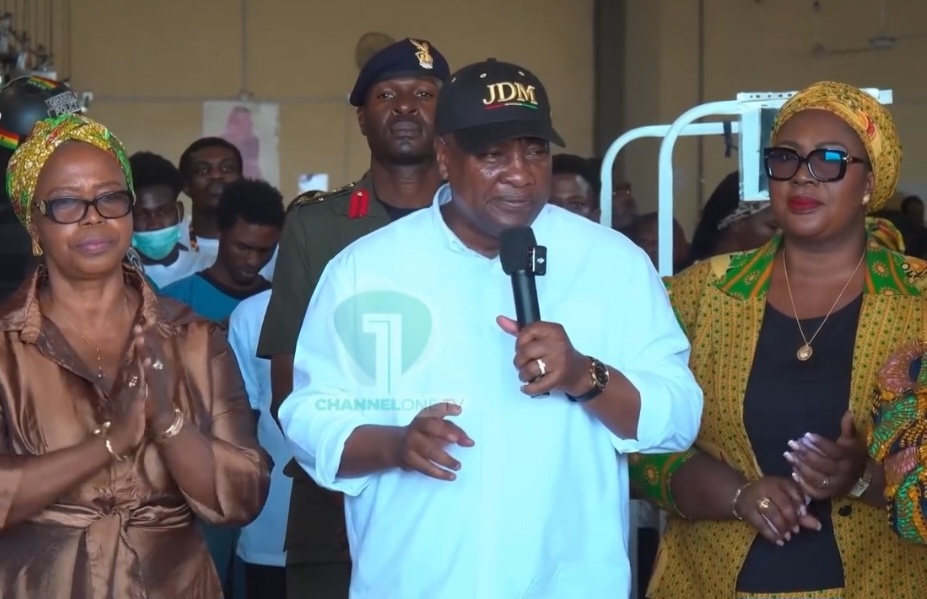

EPA Shuts Down Empire Cement Factory Over Air Pollution
Gladson Afriyie
Journalist · Ghana Ntentan
Advertisement
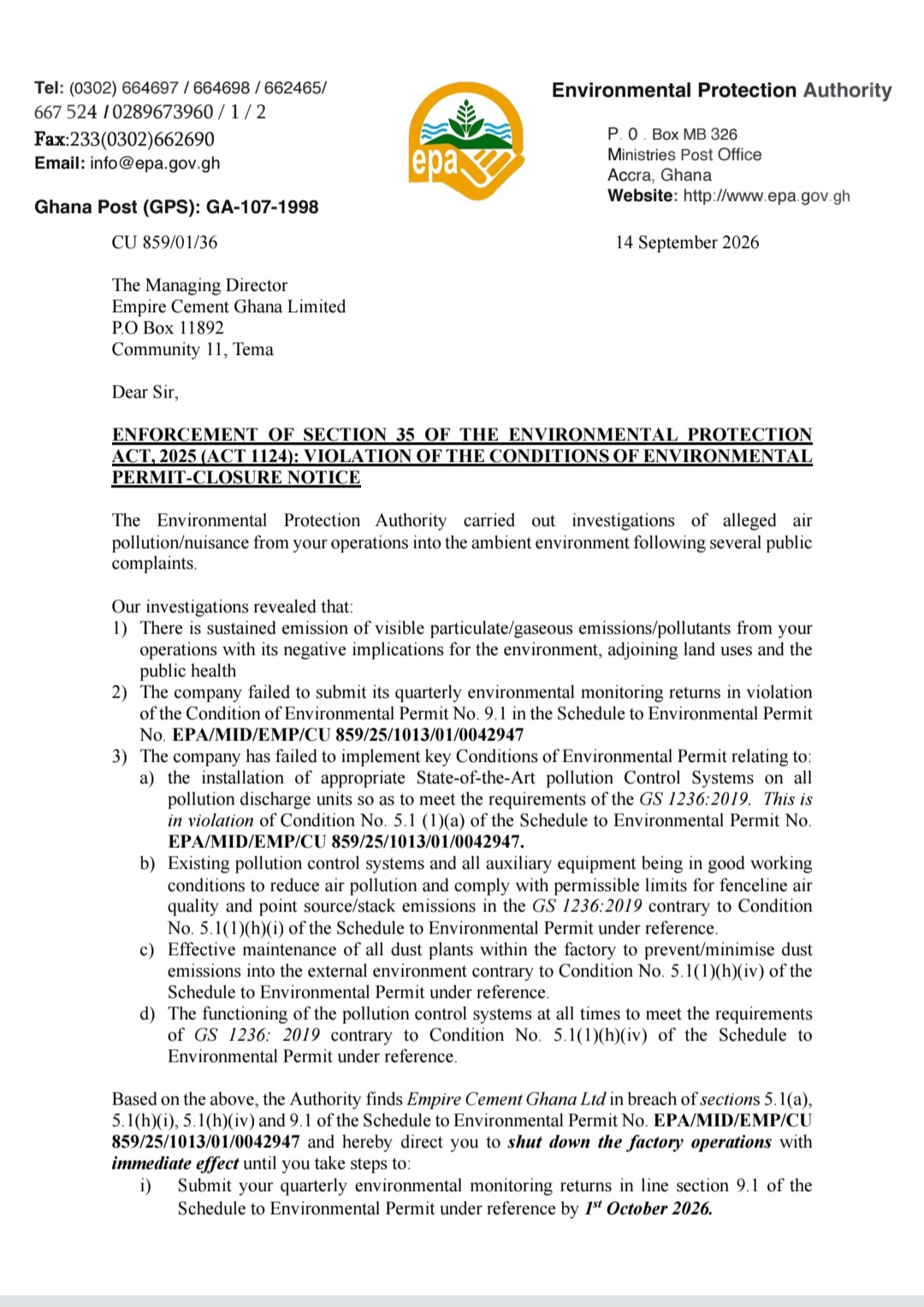
The Environmental Protection Authority (EPA) has ordered Empire Cement Ghana Ltd to shut down its factory operations with immediate effect over air pollution concerns.
According to the EPA, the enforcement action follows several complaints from members of the public about alleged air pollution and nuisance caused by the company's operations.
The Authority said investigations it conducted established that the company was releasing sustained visible particulate and gaseous emissions into the environment, with potential negative effects on the environment, adjoining land uses and public health.
In a statement issued on September 14, the EPA said its findings also revealed several breaches of the conditions attached to the company’s Environmental Permit, leading to the closure order under Section 35 of the Environmental Protection Act, 2025 (Act 1124).
Among the breaches, the EPA cited the company’s failure to submit its quarterly environmental monitoring returns, contrary to Condition 9.1 of its Environmental Permit.
The Authority further said the company had failed to implement key requirements for controlling air pollution from its factory.
This includes the failure to install appropriate state-of-the-art pollution control systems on all pollution discharge units to ensure compliance with the Ghana Standard for Environment and Health Protection – Requirements for Ambient Air Quality and Point Source/Stack Emissions (GS 1236:2019).
The EPA added that existing pollution control systems and auxiliary equipment at the facility were not being maintained in good working condition to effectively reduce emissions and ensure compliance with permissible limits for fenceline air quality and point-source emissions.
Advertisement
About the Author
Gladson Afriyie
Journalist at Ghana Ntentan
Gladson Afriyie covers the latest developments in Ghana and across Africa for Ghana Ntentan. With a focus on accurate reporting and in-depth analysis, they bring context and clarity to the stories that matter most to Ghanaians.